AAA Gaming Launch Campaign
Client
Leading Semiconductor Manufacturer, in partnership with Activision
TL;DR
A fast-moving AAA game launch where I ran the entire visual campaign solo, normally a two-to-three-designer job, while navigating a hard constraint: promote a weapon-focused title without showing weapons. The campaign became the template for a partnership that ran for seven years and 10-12 major titles annually.
-
Launch a high-profile AAA title through a joint venture between a leading semiconductor manufacturer, Activision, and hardware partners including MSI, Asus, Dell, Lenovo, HP, CyberPowerPC, Razer, NVIDIA, Corsair, and Samsung. The campaign spanned four sweepstakes, three influencer activations, merchandise, and paid social, targeting gamers 18-35, all under a strict brand constraint: the game's marketing couldn't show weapons, despite weapons being central to the gameplay.
-
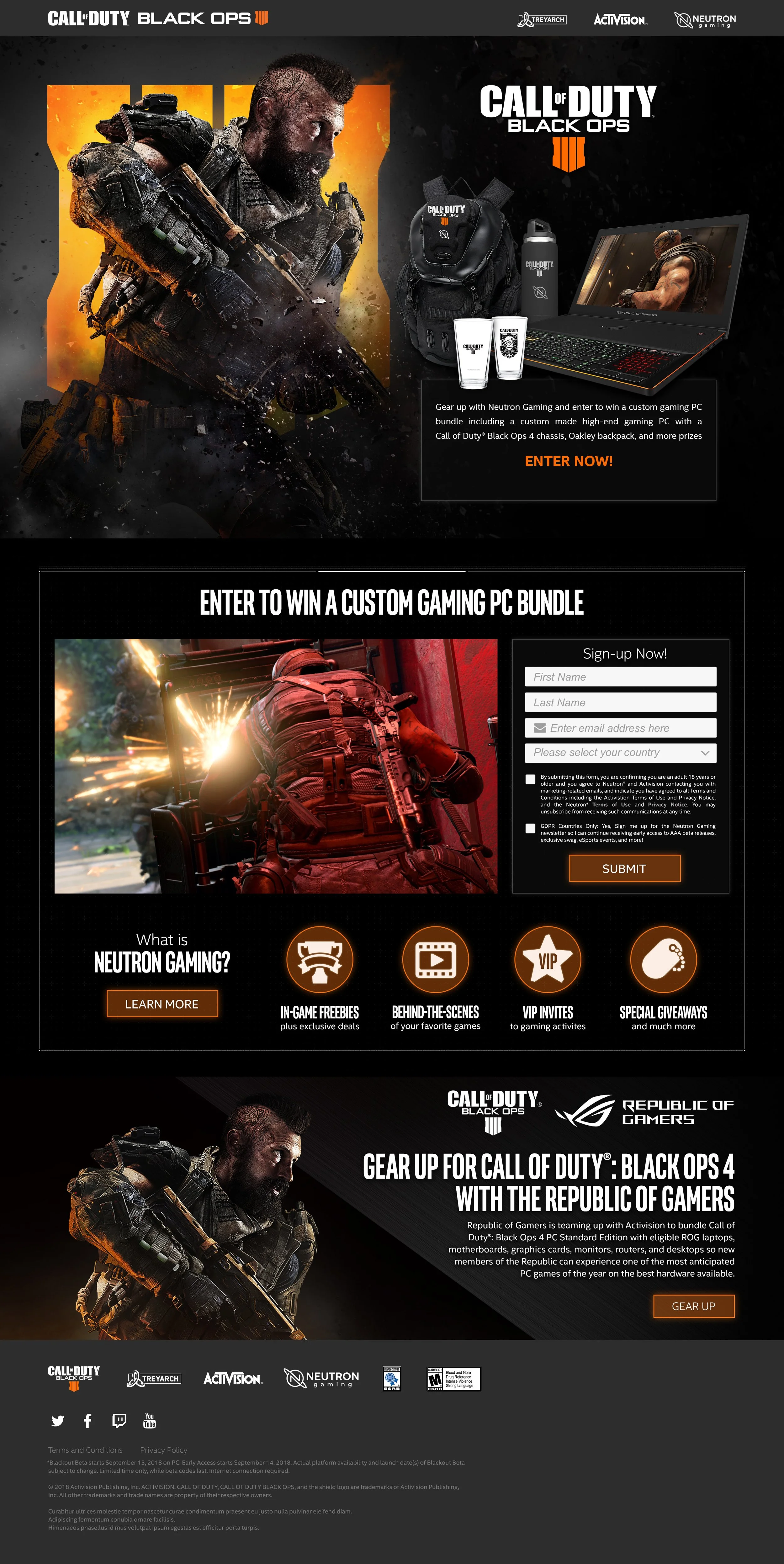
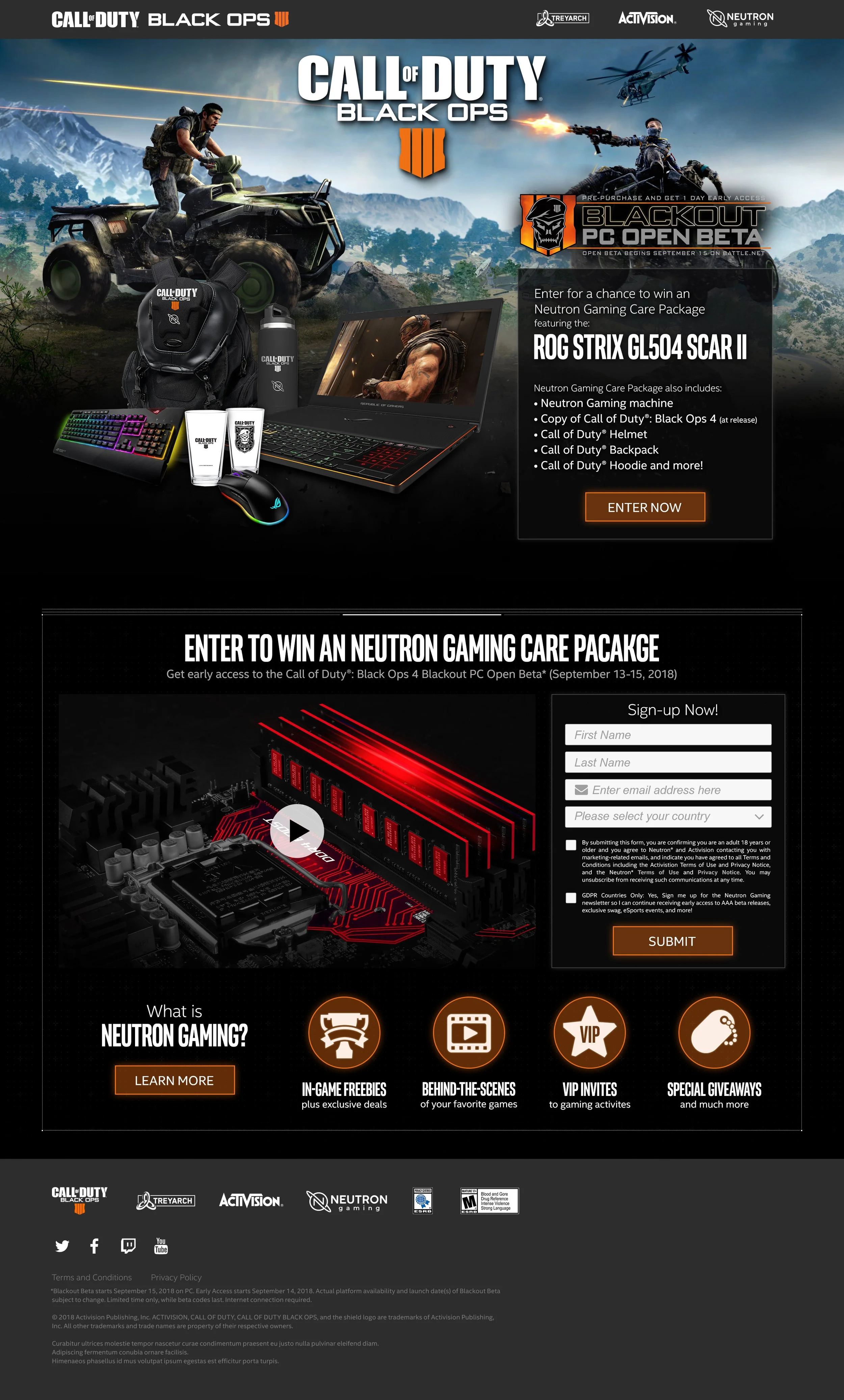
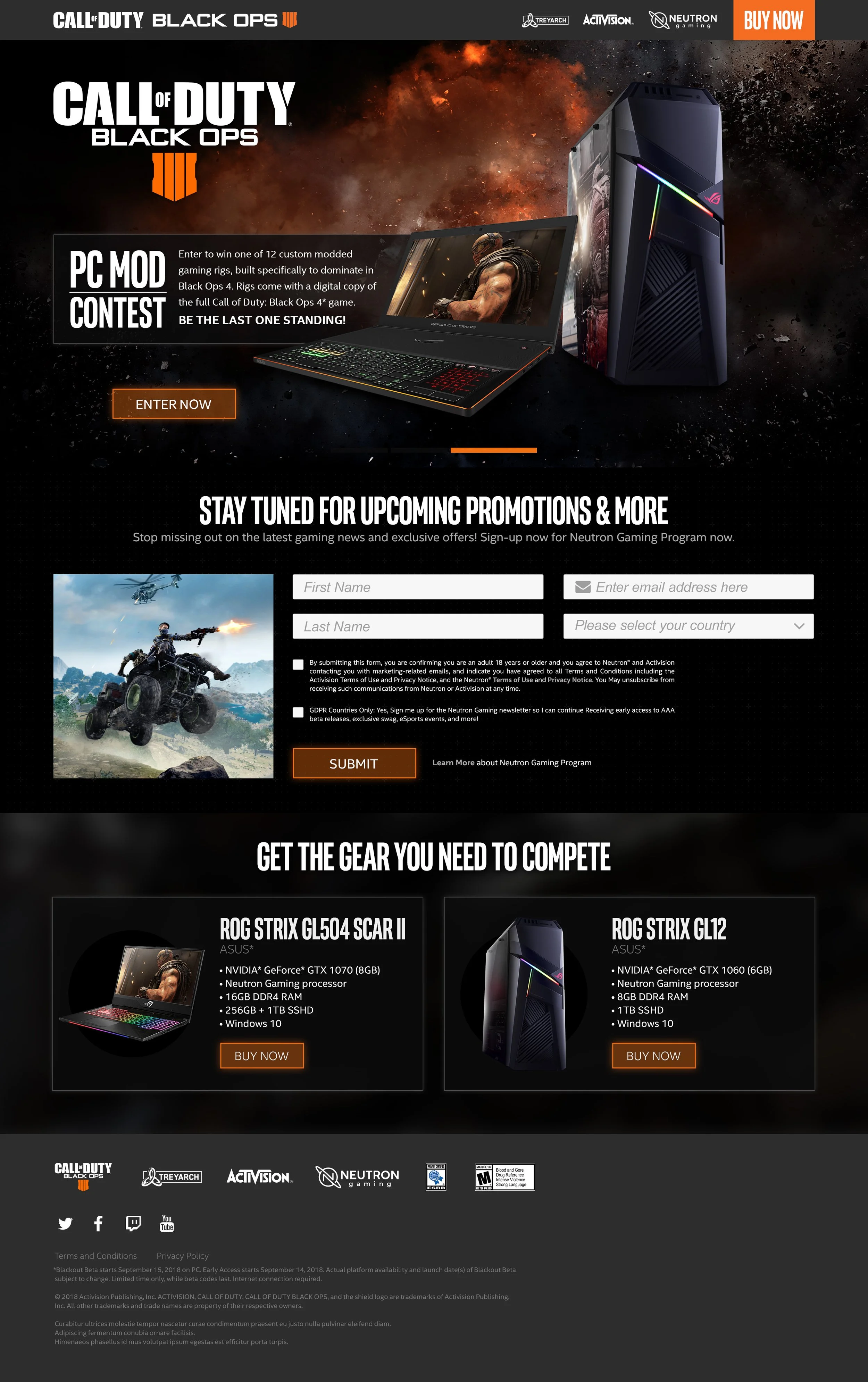
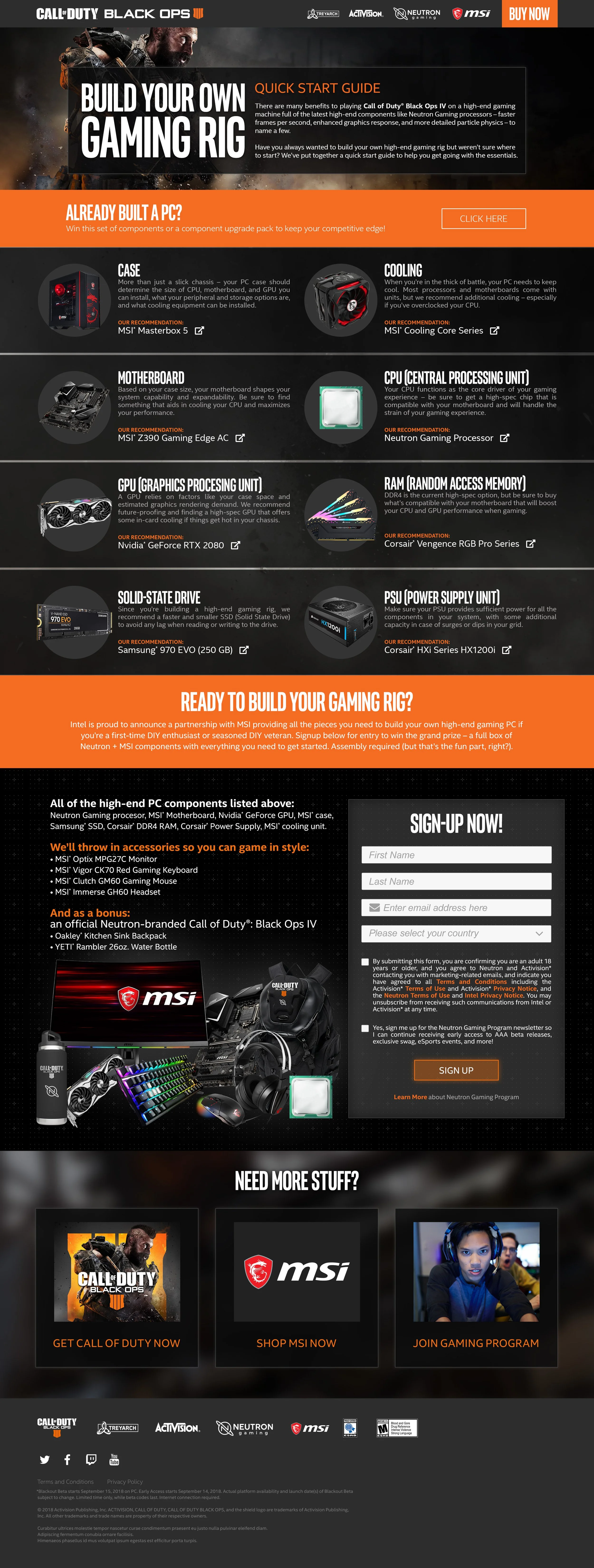
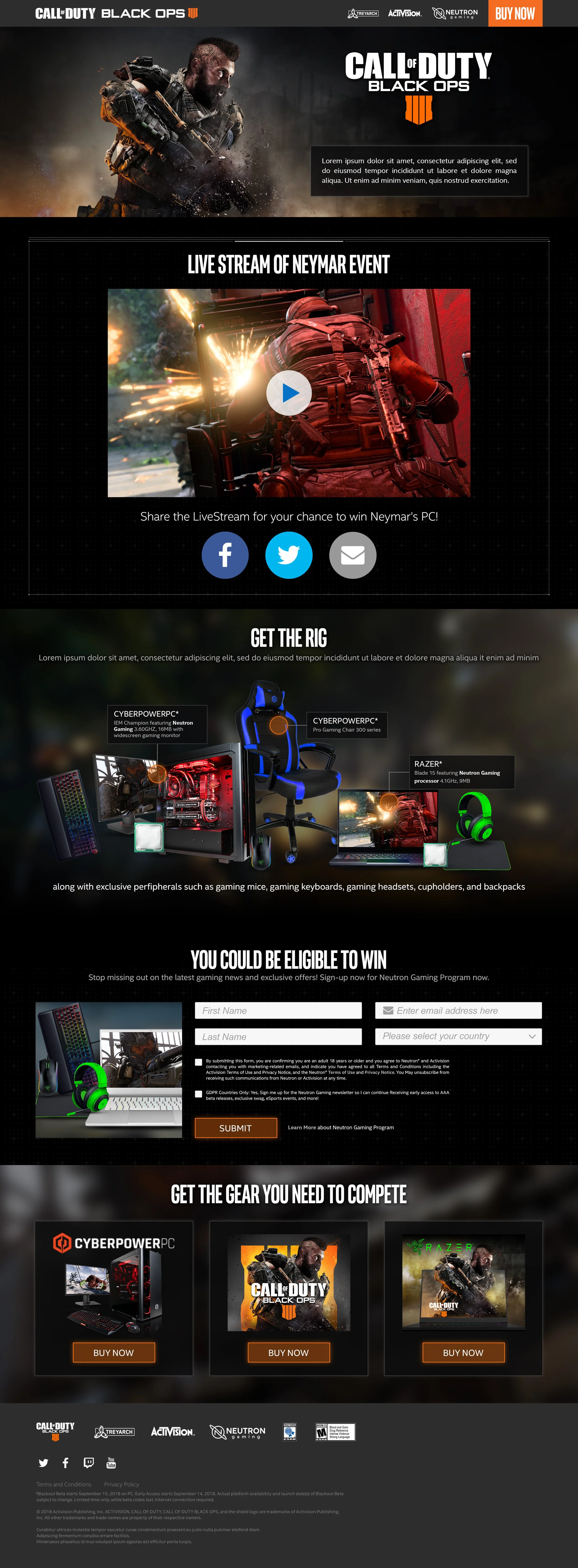
Designed and executed the entire visual campaign solo: sweepstakes sites, influencer content, email nurture, and paid social, a scope typically staffed by two to three designers.
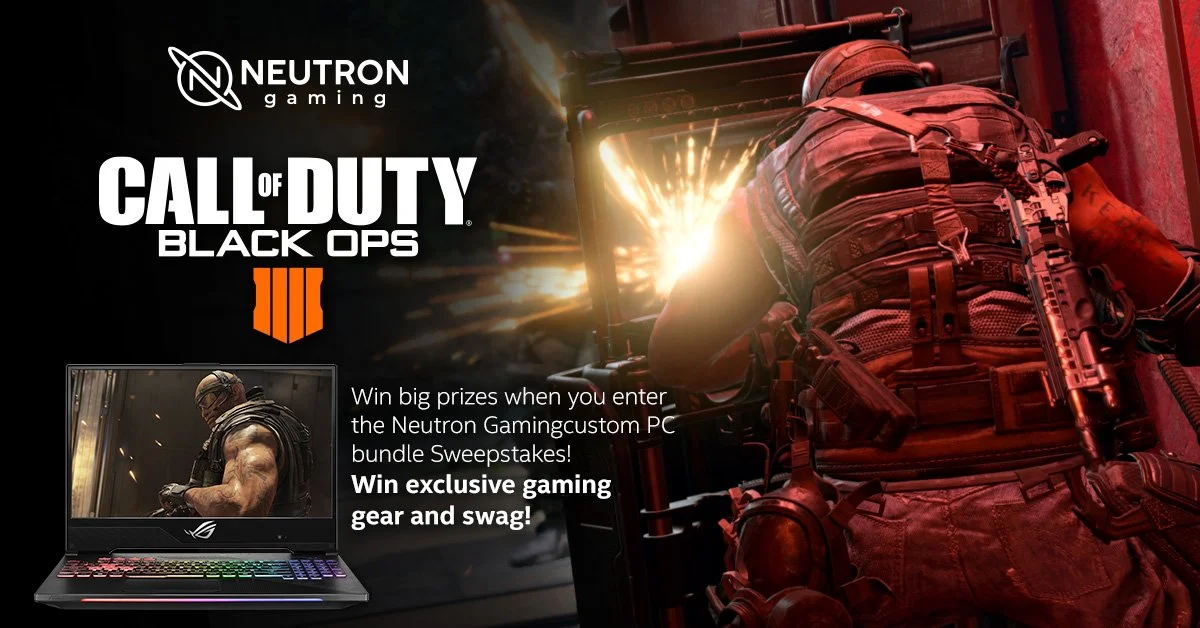
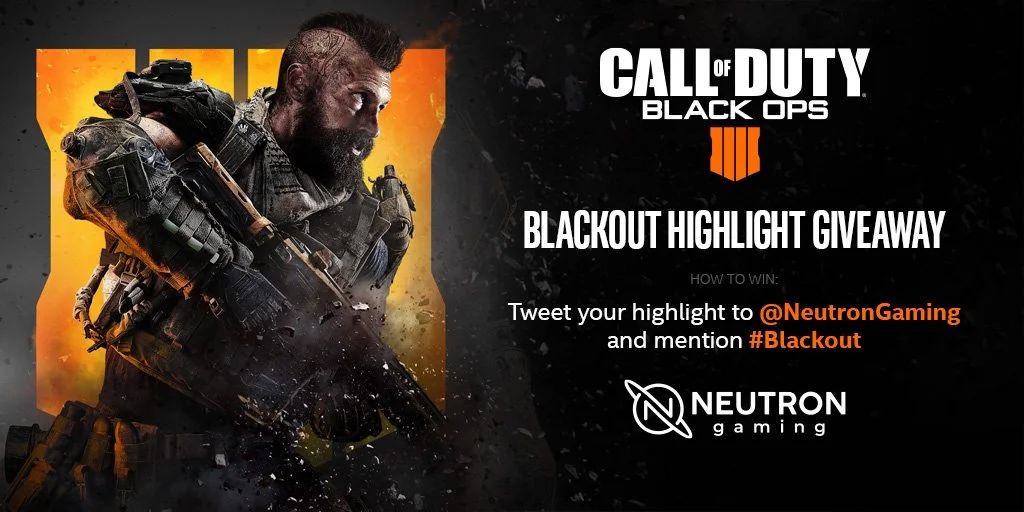
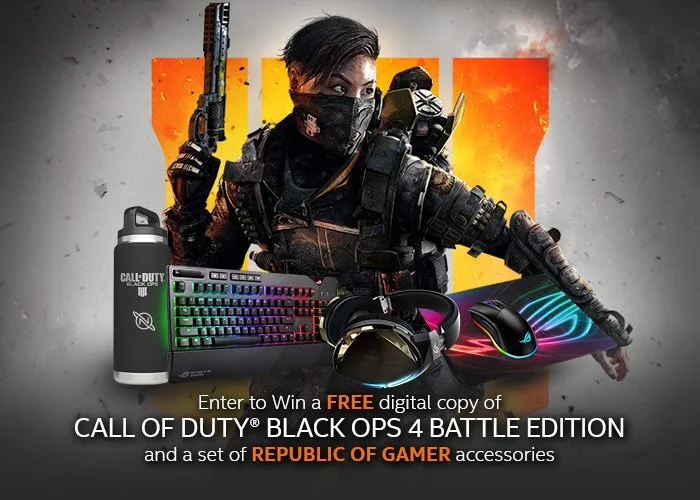
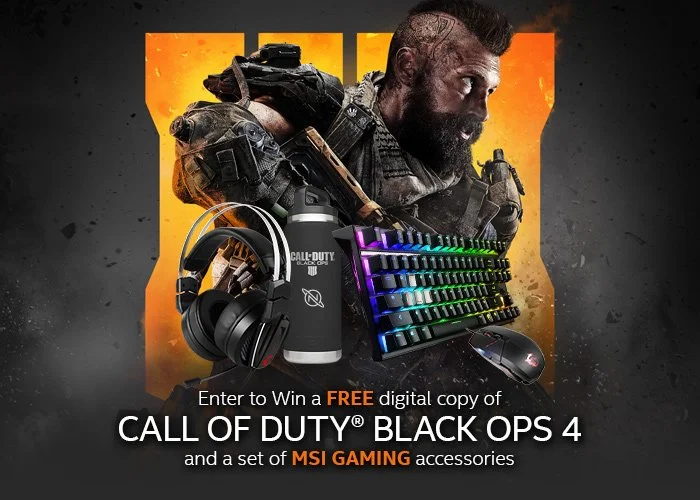
Solved the weapon restriction by building compositions around the hero character rather than the weapon: cropping, strategic logo placement, fades, and character positioning that kept the intensity of the game front and center without a firearm ever entering frame.
Coordinated approval on every asset across the semiconductor client and Activision, across time zones and compressed timelines, with zero creative conflicts through launch.
Stayed available outside standard hours when the campaign demanded it, including restructuring a weekend to turn around a last-minute sweepstakes landing page ahead of a Monday launch.
-
The campaign's success turned into a seven-year partnership, expanding to 10-12 major AAA titles annually. It also gave rise to a related program applying the same approach to creator- and digital-arts-focused campaigns, which I also led design on.
The Full Story
Purpose
This project was a joint venture between a leading semiconductor manufacturer and Activision, alongside hardware partners spanning MSI, Asus, Dell, Lenovo, HP, CyberPowerPC, Razer, NVIDIA, Corsair, and Samsung. The work covered four sweepstakes, three influencer activations, and merchandise fulfillment, aimed at gamers 18-35. The goal was straightforward: build enthusiasm for the PC version of the title, tied directly to the client's processor chipset, and drive engagement, purchase intent, and sales across their PC lineup.
Workflow
The engagement ran roughly six months, with sweepstakes and influencer programs launching first, email and paid social running continuously alongside them, and streamer community challenges layered in as a lower-priority addition. Metrics reporting ran throughout, with merchandise and custom packaging closing out the campaign. I worked alongside a Project Director, a copywriter, and a developer, and I was the only designer on the account, responsible for every visual asset across the entire campaign.
Challenges
A project this size is normally staffed with two to three designers. My Creative Director gave it to me solo, with support available if needed, which meant every design decision and every deliverable ran through me. Layered on top of the standard challenges, tight timelines, dual sign-off from both the semiconductor client and Activision, coordination across time zones, was the brand's hard restriction against showing weapons in any public-facing asset, on a game built around weapon combat.
Solutions
The weapon constraint became the defining creative problem of the project. I built every composition around the hero character instead of the weapon, cropping tightly, using logo placement and fades to obscure firearms, and positioning characters so the energy and intensity of the game came through without a gun ever landing in frame. Every asset went through both the semiconductor client and Activision for sign-off, and every one cleared without conflict. I also spent real time studying both brands' guidelines and researching comparable gaming campaigns, which shaped a visual approach that felt native to the franchise rather than generic. When the schedule demanded it, I stayed flexible, including one Saturday when my Project Director reached out about a newly-approved sweepstakes page that needed to launch Monday. It wasn't the ideal way to spend a weekend, but the ask was reasonable and time-sensitive, so I turned it around. It cost me a few hours and bought real trust with the client.
Conclusion
The campaign outperformed expectations enough that it became the template for the account going forward, growing into a seven-year relationship averaging 10-12 major AAA titles a year. It also spun off a related program applying the same playbook to creator and digital-arts-focused campaigns, which I also led design on. Running this project solo, with full autonomy over creative direction within the brand's guardrails, is what led my Creative Director to hand me subsequent large-scale campaigns independently going forward.
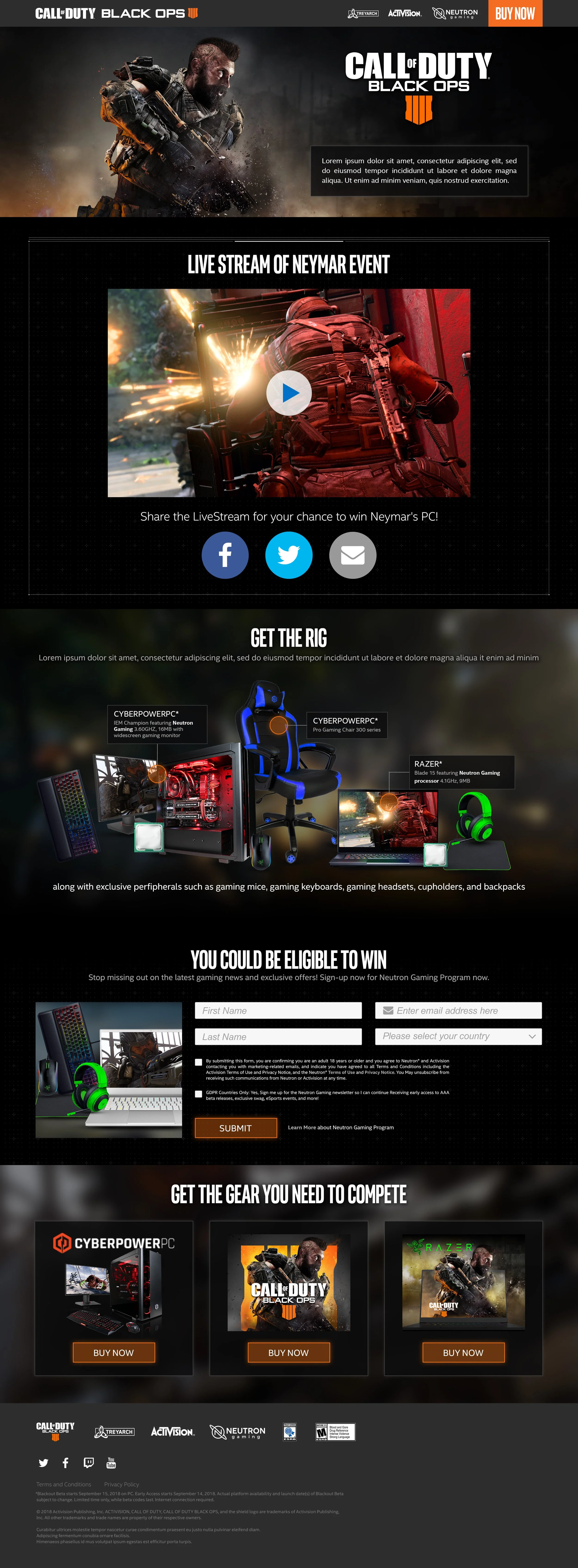
Landing Pages.
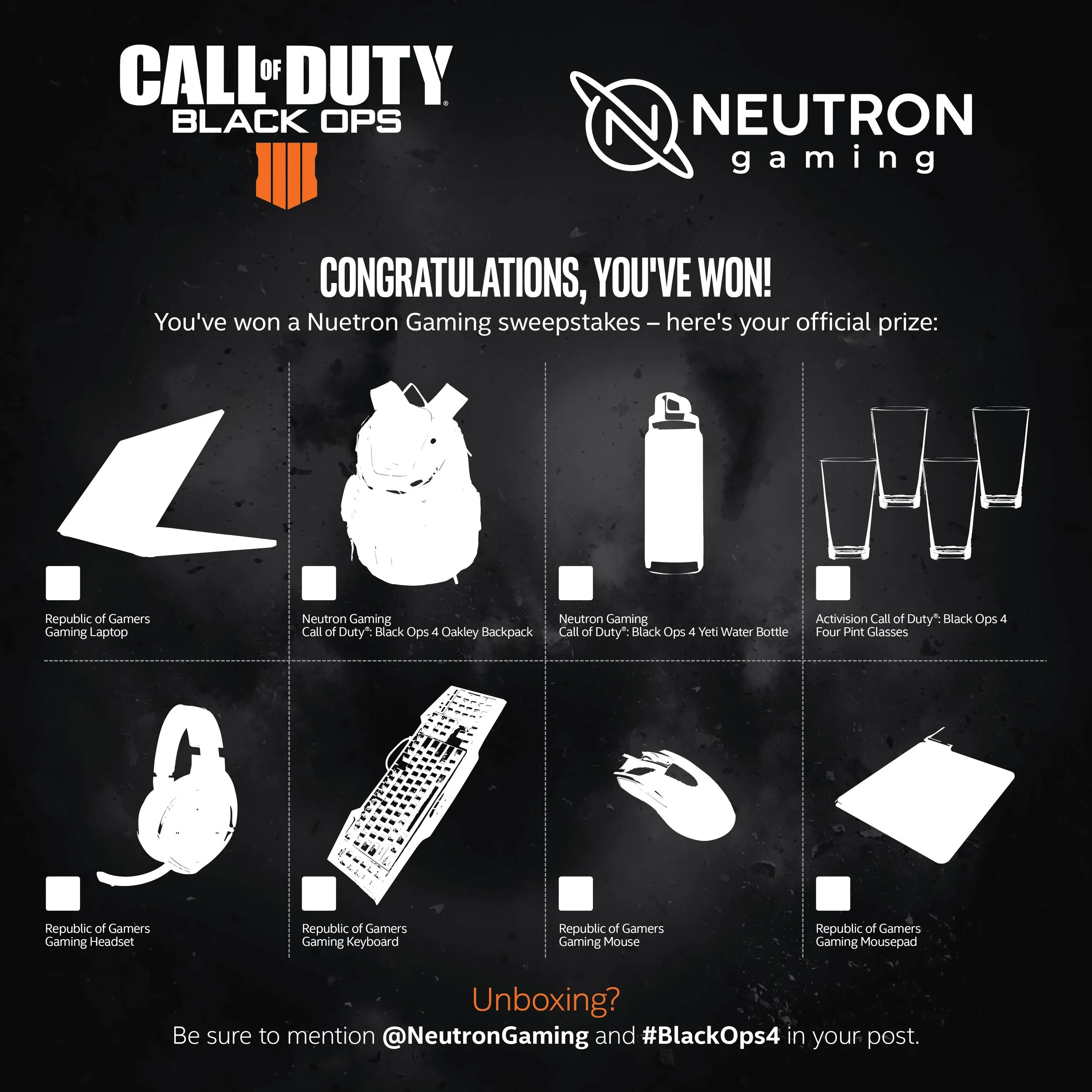
Socials & Emails.




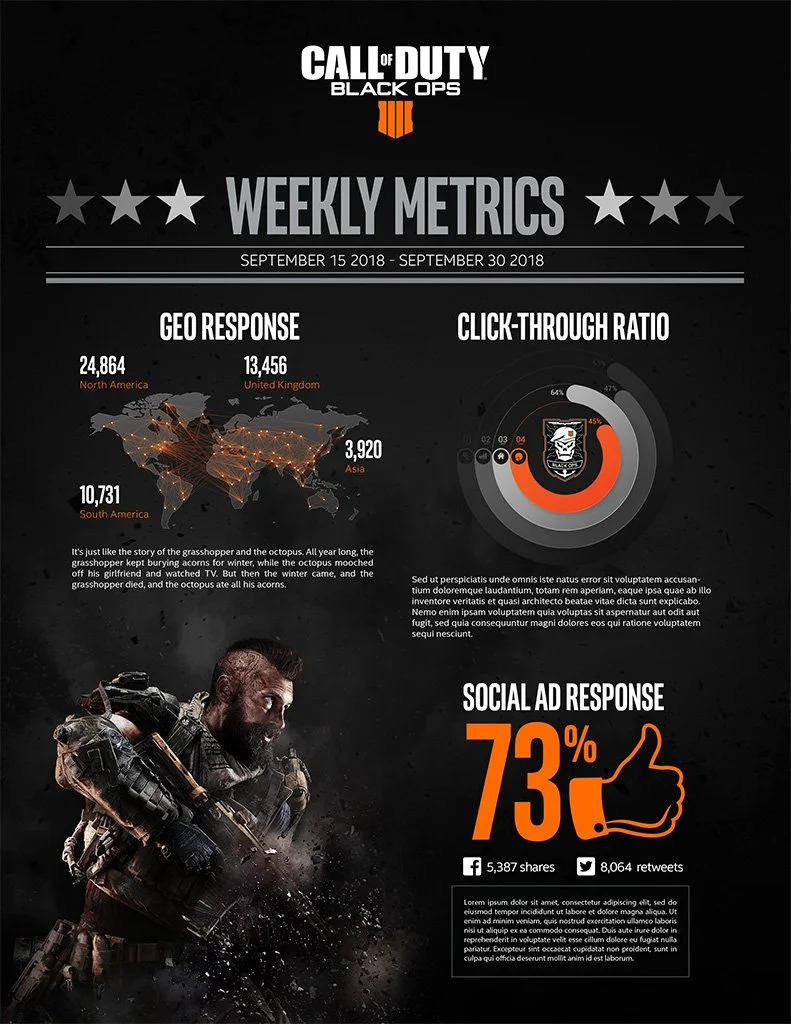
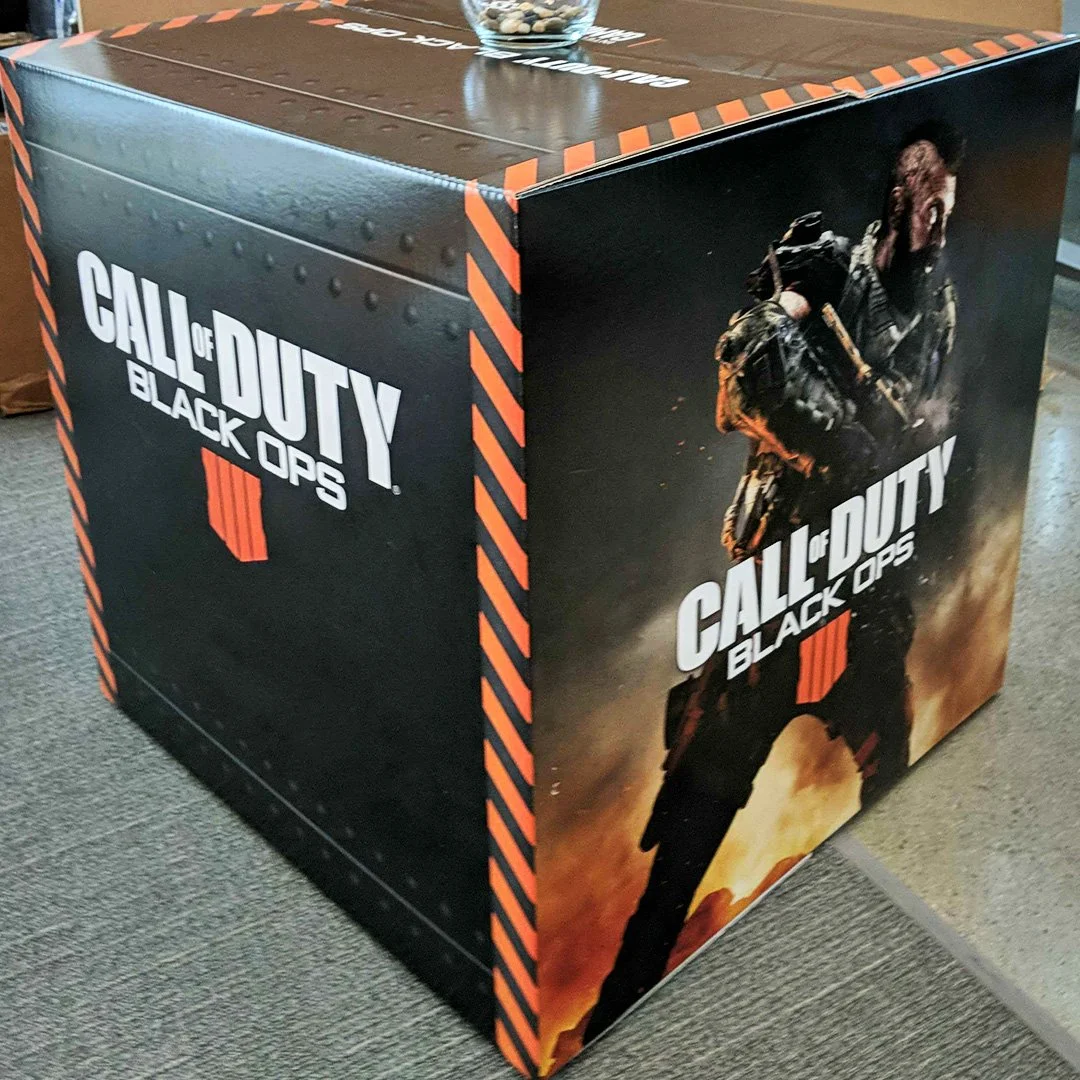
Metrics & Packaging.