Gaming Platform Competitive Analysis
Client
Leading Semiconductor Manufacturer
TL;DR
A five-month research deep-dive comparing gaming platforms and ecosystems, PlayStation, Xbox, Steam, Battle.net, GOG.com, HP Omen, Razer Cortex, Radeon, and NVIDIA GeForce, across ten evaluation categories, built to help the client understand the competitive landscape and inform future positioning.
-
Evaluate the gaming and platform ecosystems of major console, PC, and cloud gaming providers to give the client a clear, executive-level picture of where each stood and where opportunities existed, a project outside the client's usual scope of work and outside my usual scope as well.
-
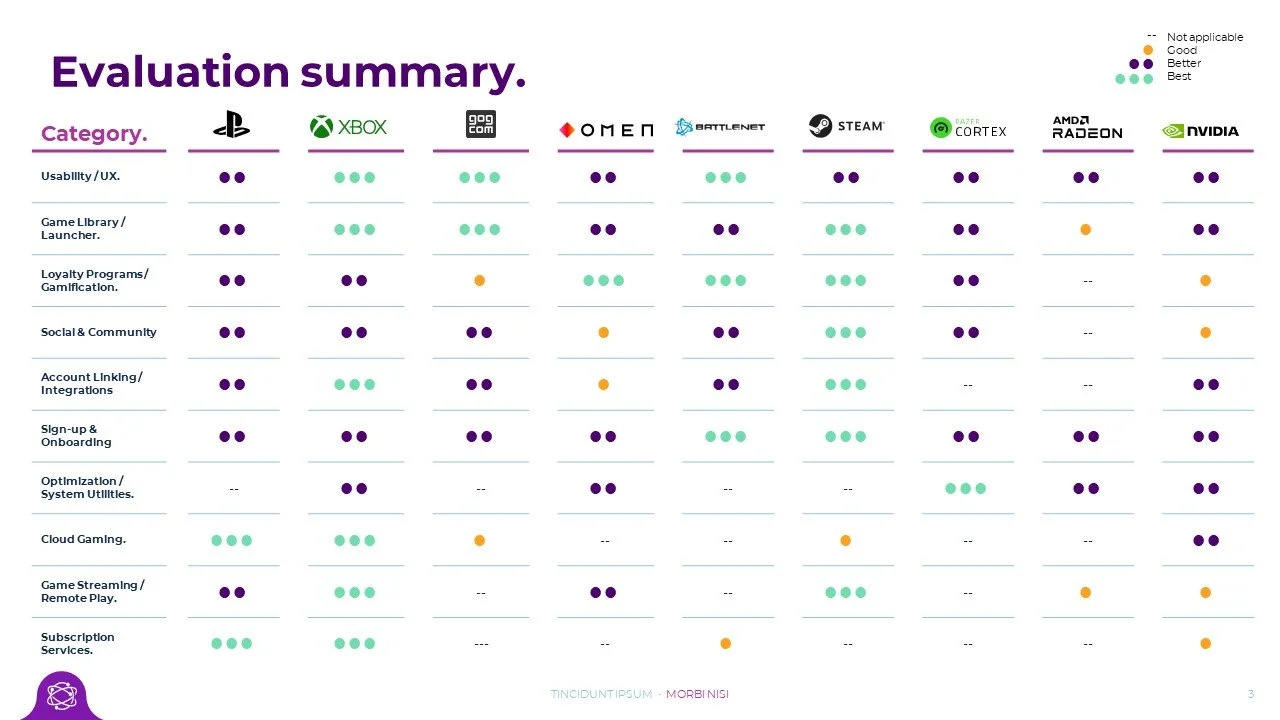
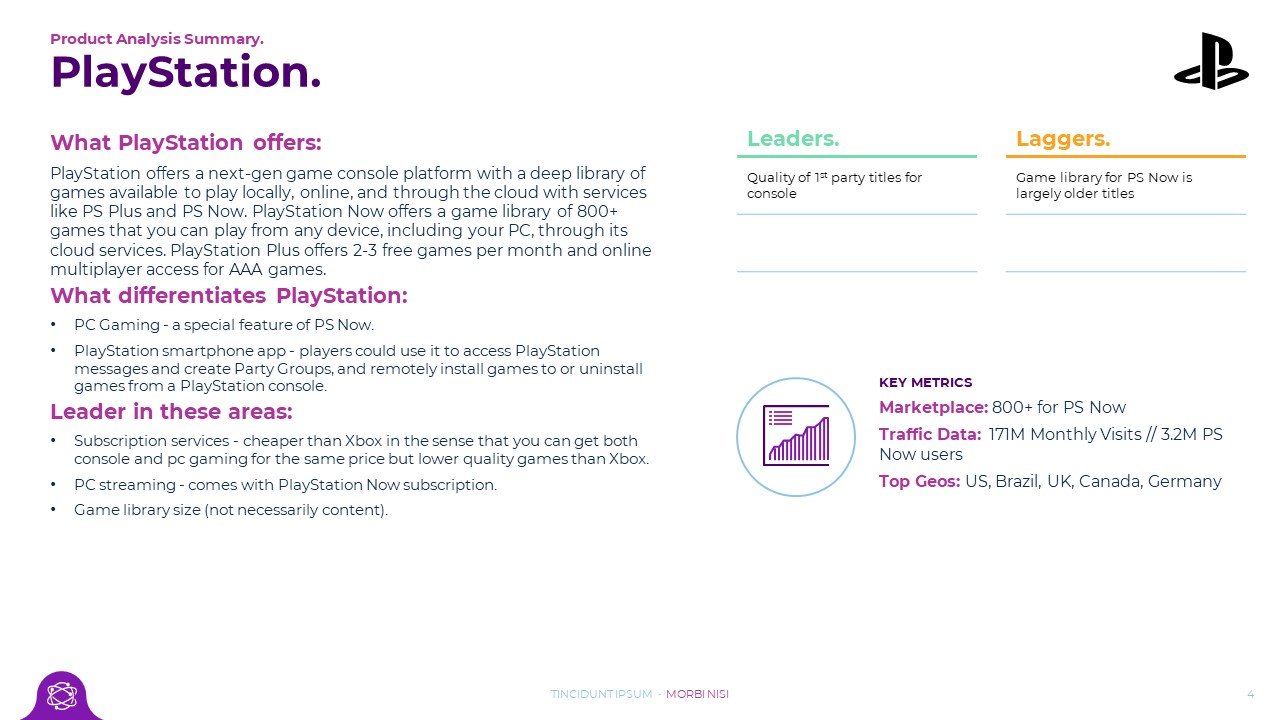
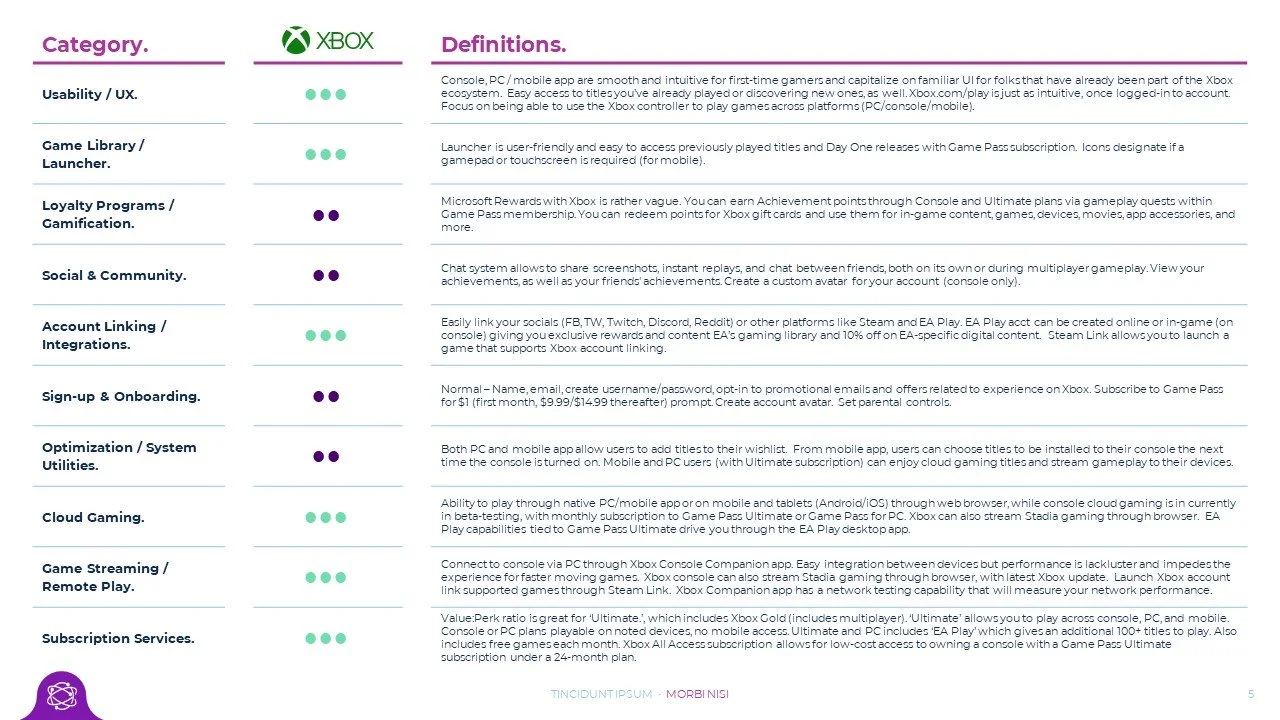
Researched and evaluated nine platforms, PlayStation, Xbox, Steam, Battle.net, GOG.com, HP Omen, Razer Cortex, Radeon, and NVIDIA GeForce, across ten categories: usability/UX, game library and launcher experience, loyalty programs and gamification, social and community features, account linking and integration, sign-up and onboarding, optimization and system utilities, cloud gaming, streaming and remote play, and subscription services.
Scored each platform on a good/better/best framework per category, approaching every platform hands-on as a new user to evaluate real functionality rather than marketing claims.
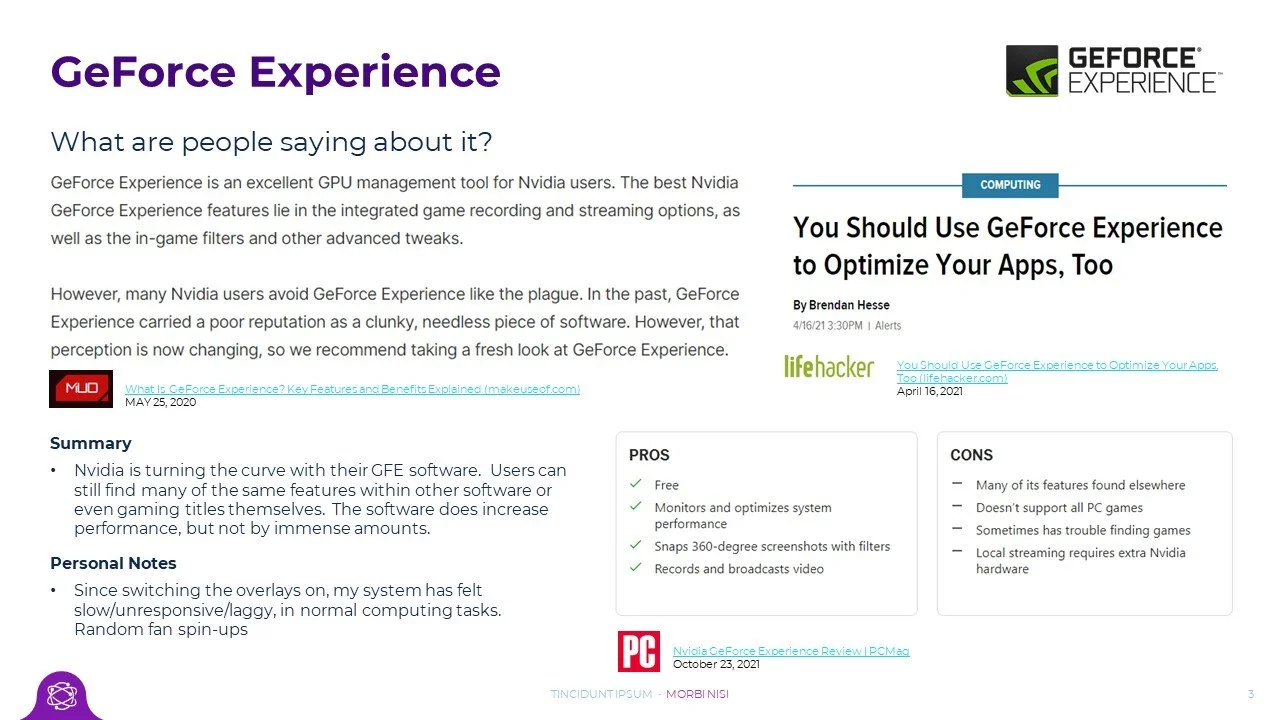
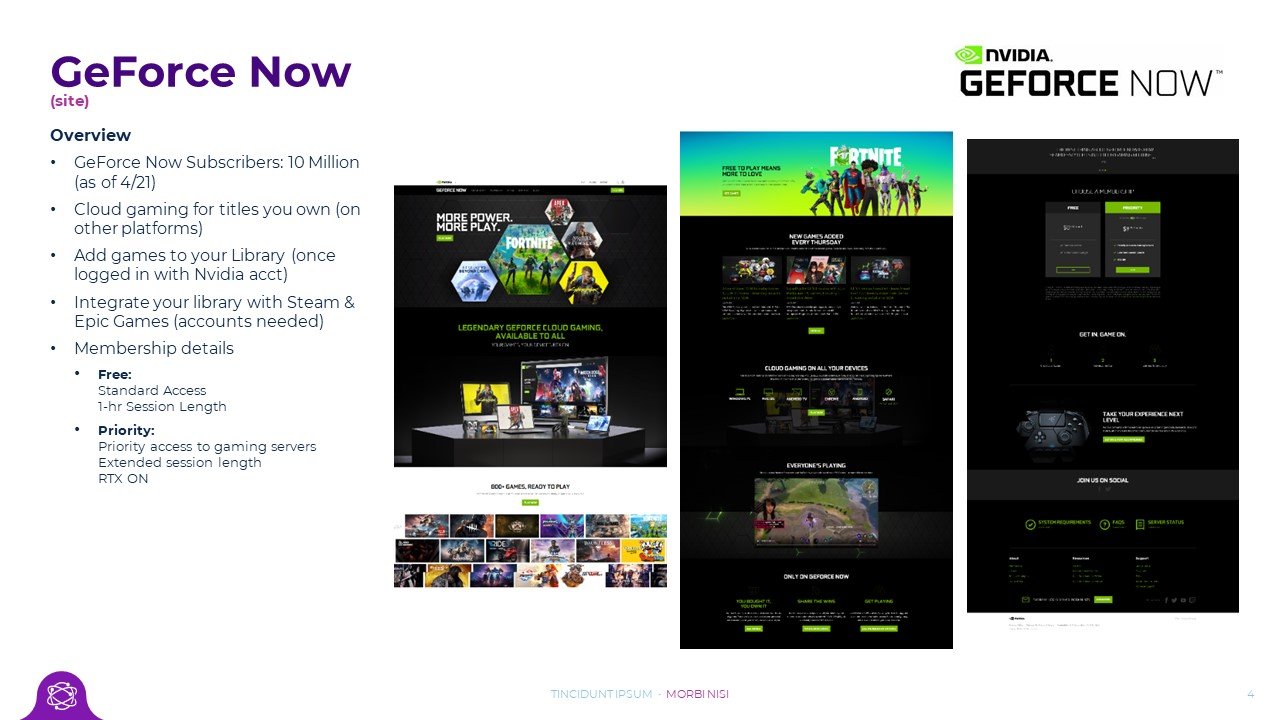
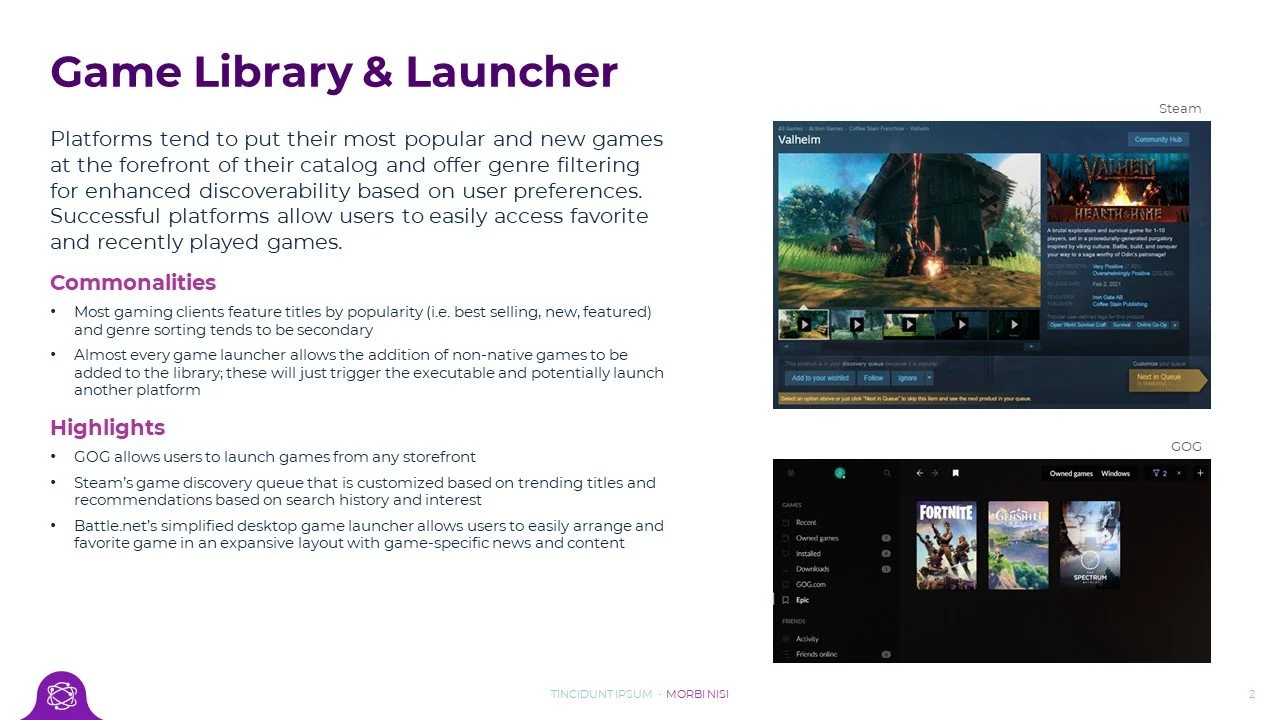
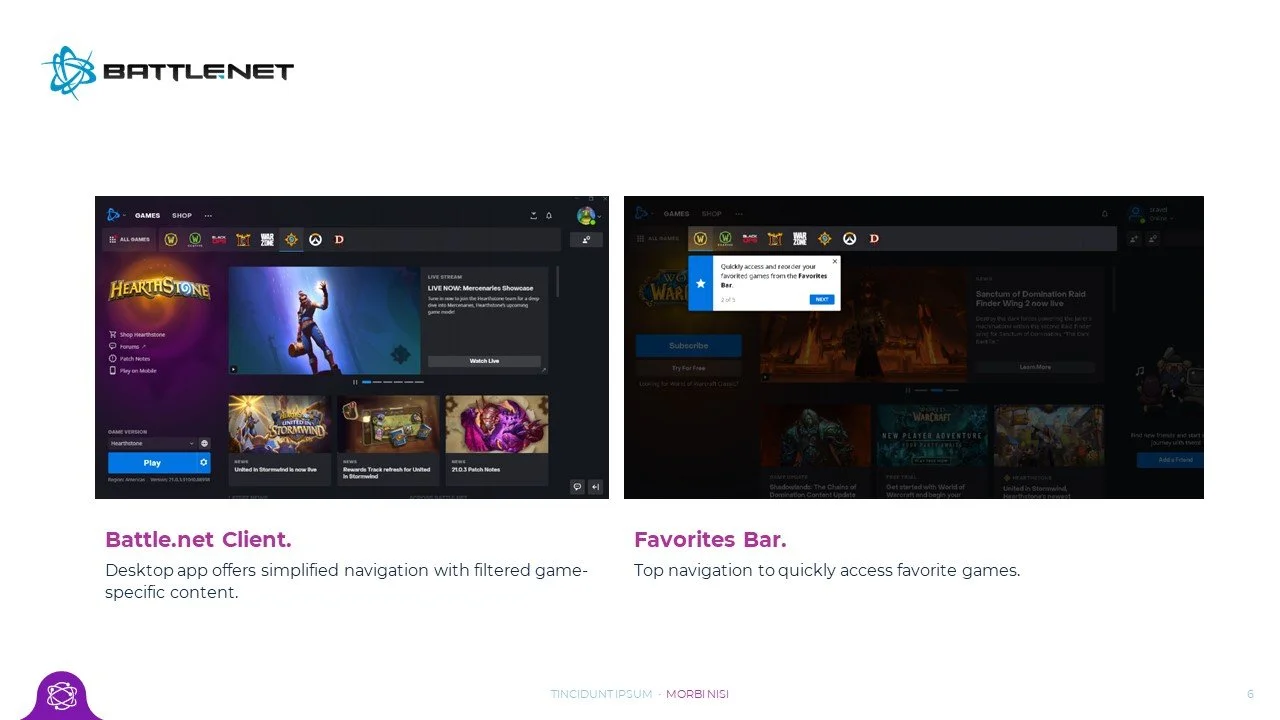
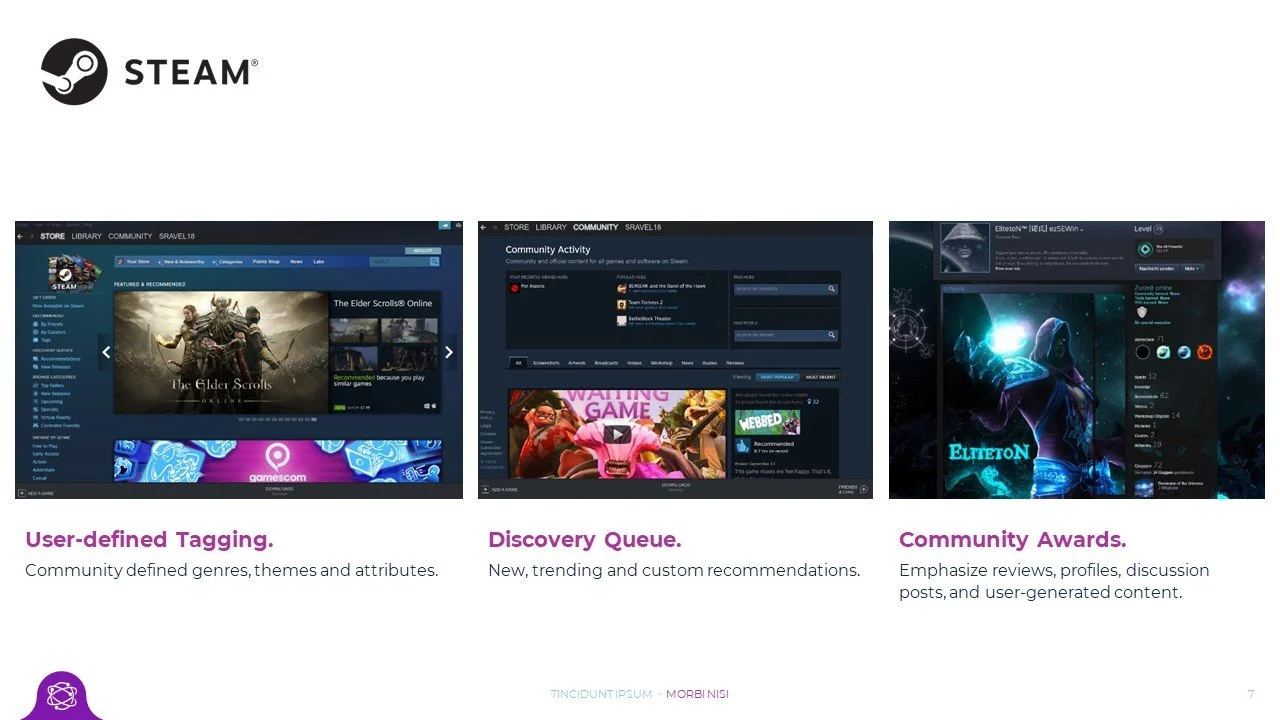
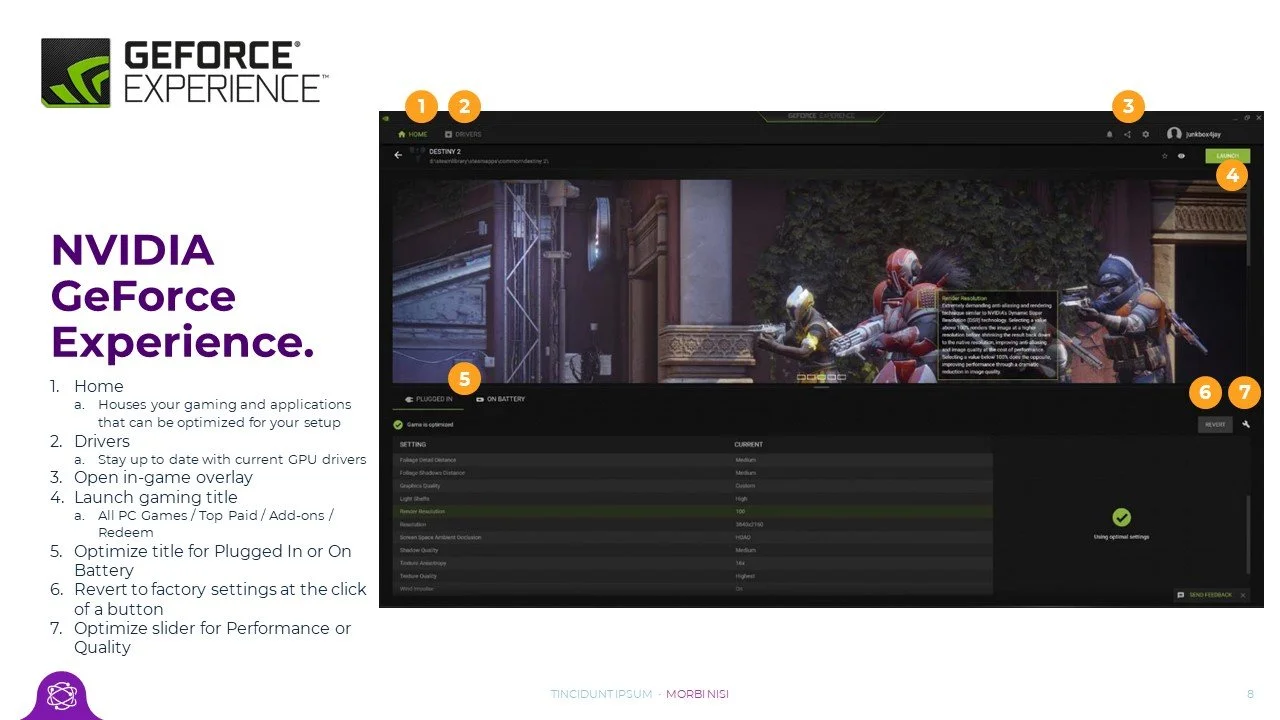
Built an executive-level presentation deck combining platform screenshots, comparative charts, and findings, presented over a two-day session to executives across three departments.
Worked alongside a Program Director and a Marketing Associate, taking on both design and primary research responsibilities, a stretch beyond my usual design-centric research scope.
-
The analysis gave the client's leadership a clear, structured view of the competitive landscape across nine platforms, and the presentation was well-received enough that two platforms were flagged for deeper follow-up analysis as the client's primary competitors. I'm not aware of a specific campaign or decision that came out of it directly, the honest outcome is that it became a structured reference point for the client's own future comparisons, which is exactly what a project like this is for.
The Full Story
Purpose
The client asked for a comprehensive analysis of the gaming platform landscape, comparing ecosystem features and capabilities across major console, PC, and cloud gaming providers: PlayStation, Xbox, Steam, Battle.net, GOG.com, HP Omen, Razer Cortex, Radeon, and NVIDIA GeForce. The goal was to give the client's leadership a clear, comparative view of where each platform stood, to inform future positioning and creative decisions. The project ran five months, with loose top-level direction from the client and full ownership on our end for how to structure and execute the evaluation.
Workflow
I worked alongside a Program Director and a Marketing Associate, splitting responsibility for research and design between the two of us, with weekly check-ins to align findings. We evaluated each platform across ten categories, usability/UX, game library and launcher, loyalty and gamification, social and community, account linking and integration, sign-up and onboarding, optimization and system utilities, cloud gaming, streaming and remote play, and subscription services, scoring each on a good/better/best scale. Research pulled from hands-on platform use, competitive analysis tools, brand websites, analyst reports, and industry news. Findings were compiled into an executive-level deck and presented over a two-day virtual session to leadership across three departments.
Challenges
This was a stretch outside my usual scope. My research experience up to this point had been design-centric, understanding a brand's visual language or a client's internal dynamics, not conducting structured competitive research across nine platforms and ten categories. I had to approach every platform as a genuinely new user, documenting real functionality rather than relying on marketing material, while also finding a way to make ten dense categories of findings visually clear across nine platforms without the deck becoming unreadable. A few platforms rolled out new features mid-project, which meant extending parts of the research to stay current, something the client had already anticipated and built room for in the timeline.
Solutions
I leaned on my design background to solve the real problem here: making an enormous amount of comparative data legible. That meant building a consistent visual system, stylized charts, platform screenshots, and a clear good/better/best scoring structure, that let the density of the research actually land instead of overwhelming the reader. Working closely with my Marketing Associate colleague to shape how each platform's findings were framed helped keep the analysis focused on what would actually matter for the client's decision-making, not just an exhaustive data dump.
Conclusion
The final analysis was well-received across all three departments in leadership, and the client asked for deeper follow-up research on two platforms identified as their primary competitors in the space. I don't have visibility into any specific campaign or product decision that came directly out of this work, the honest scope of the outcome is that it became a structured, in-house reference the client held onto for future comparisons. Beyond the deliverable itself, this project proved I could step outside a purely design-centric role and take on primary research and analysis, a skill I hadn't previously had the chance to demonstrate.
Deck One.

Deck Two.